


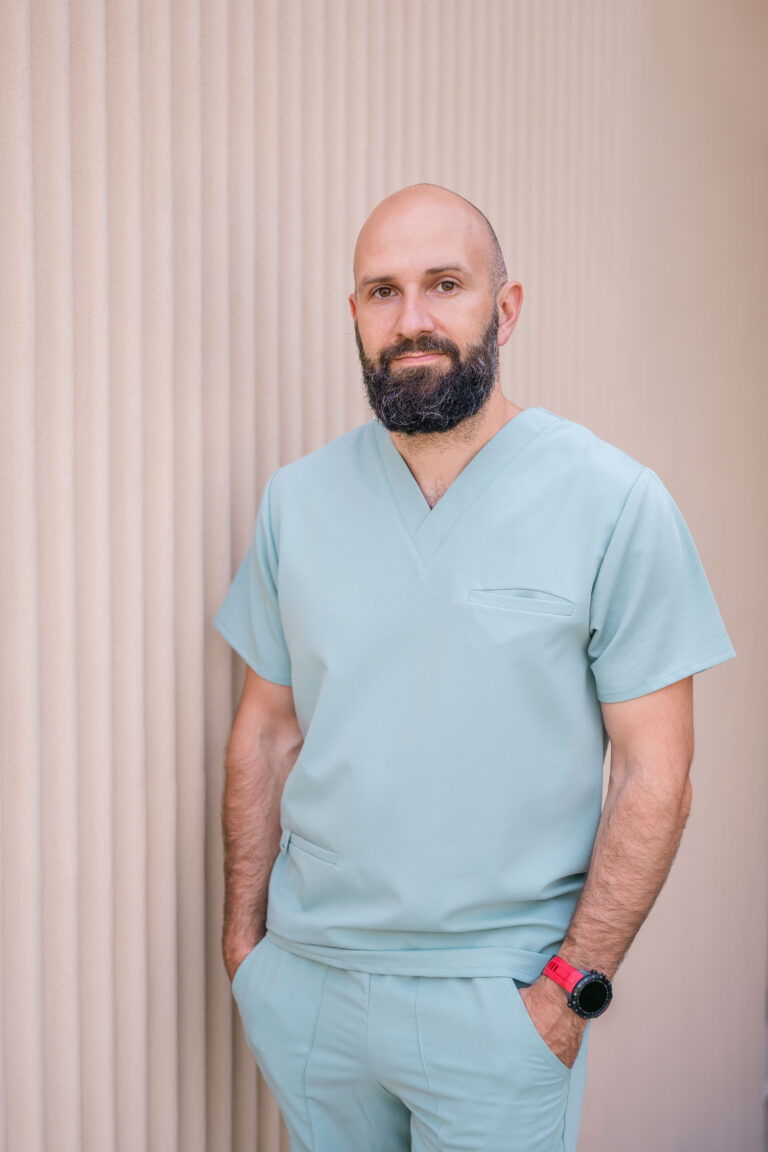


Adult patient


The removal of wisdom teeth is one of the most common dental surgeries. It is performed when there is not enough space for the tooth, it causes inflammation or pain, or it threatens neighboring teeth. Thanks to modern anesthesia and gentle techniques, it is a quick and easily manageable procedure.
Before extraction, a clinical examination and CBCT scan are performed to determine how the roots are positioned and whether the tooth is in contact with surrounding structures. The doctor will explain the procedure, healing time, and recommended medications.
The extraction is performed under local anesthesia. For wisdom teeth that are partially or completely embedded in the bone, a small incision must be made in the gum. The tooth is separated into smaller pieces as needed so that it can be removed gently and without excessive pressure. After cleaning the wound, stitches are usually applied. The entire procedure usually takes 10-30 minutes, depending on its complexity.
During the first few hours after the procedure, it is important to leave the blood clot in the wound, refrain from eating, avoid hot drinks, and do not rinse the wound. Swelling can be reduced by cooling the face. During the first day, a soft diet, rest, and the use of recommended analgesics are recommended. On the second day, you can carefully begin oral hygiene around the wound and use antiseptic rinses.
Mild swelling, sensitivity, and limited mouth opening are common for several days. Stitches are usually removed after 7–10 days, unless they are absorbable. Full healing is individual; soft tissue heals within two weeks, bone within several weeks to months.
If the pain worsens significantly, there is an unpleasant odor or pus, fever, or significant swelling, you need to see a doctor. This could be a case of dry bed, which requires treatment.
our team
Meet our extraction specialists.
Tooth extraction
Tooth extraction is a procedure in which a tooth is removed from the jaw. It is performed when a tooth is severely damaged by decay, broken, or causing other problems. The procedure is performed under local anesthesia, and after extraction, wound care is recommended to ensure proper healing without complications.

